How to get ChatGPT and other AI to recommend your business: it can only tell what it knows
The night before a concert, someone asks an AI which salon nearby can do event hair on Saturday afternoon. It names three. The best salon in the area isn't one of them, because the AI has no idea what that salon does.

Key points
- When people ask about local businesses, many AI assistants search the web and summarise what they find. They don't know businesses from first-hand experience.
- Nobody outside the companies that build these assistants knows exactly how they choose businesses, and answers can change each time you ask.
- Businesses that spell out their services, prices, area and hours as plain text on a website are easier for both people and AI to understand.
- A name, address, phone number and hours that match everywhere make it less likely an assistant gives wrong details or skips you.
- Nobody can guarantee an AI will recommend your business. The same groundwork that helps you on Google is what you can actually do.
Ten o'clock on a Friday night. A university student has just got a last-minute ticket to a concert on Saturday afternoon and wants her hair done before she goes, but doesn't know any salons near the venue. She doesn't open Google Maps. She opens an AI app and types a long question: "hair salon near the concert hall that does event styling, free around noon tomorrow, under 1,000 baht".
The assistant names three salons with a short reason for each. The first has a web page that says "event hair from 800 baht, open weekends, book on LINE". The second has several reviews mentioning hair for weddings. The third appears in an article about places to go in that neighbourhood.
A few hundred metres away is the salon with the best event styling in the area. Its page is full of beautiful work, but its prices and hours live inside poster images, its name on Google doesn't match its name on Facebook, and nowhere does it say in plain words that it does event hair. It isn't mentioned at all.
We can't know every step of how that assistant reasoned. But the pattern we keep seeing is that AI recommends businesses it has clear, consistent information about. It can only describe what it knows.
AI answers from what it can find, not from knowing your business
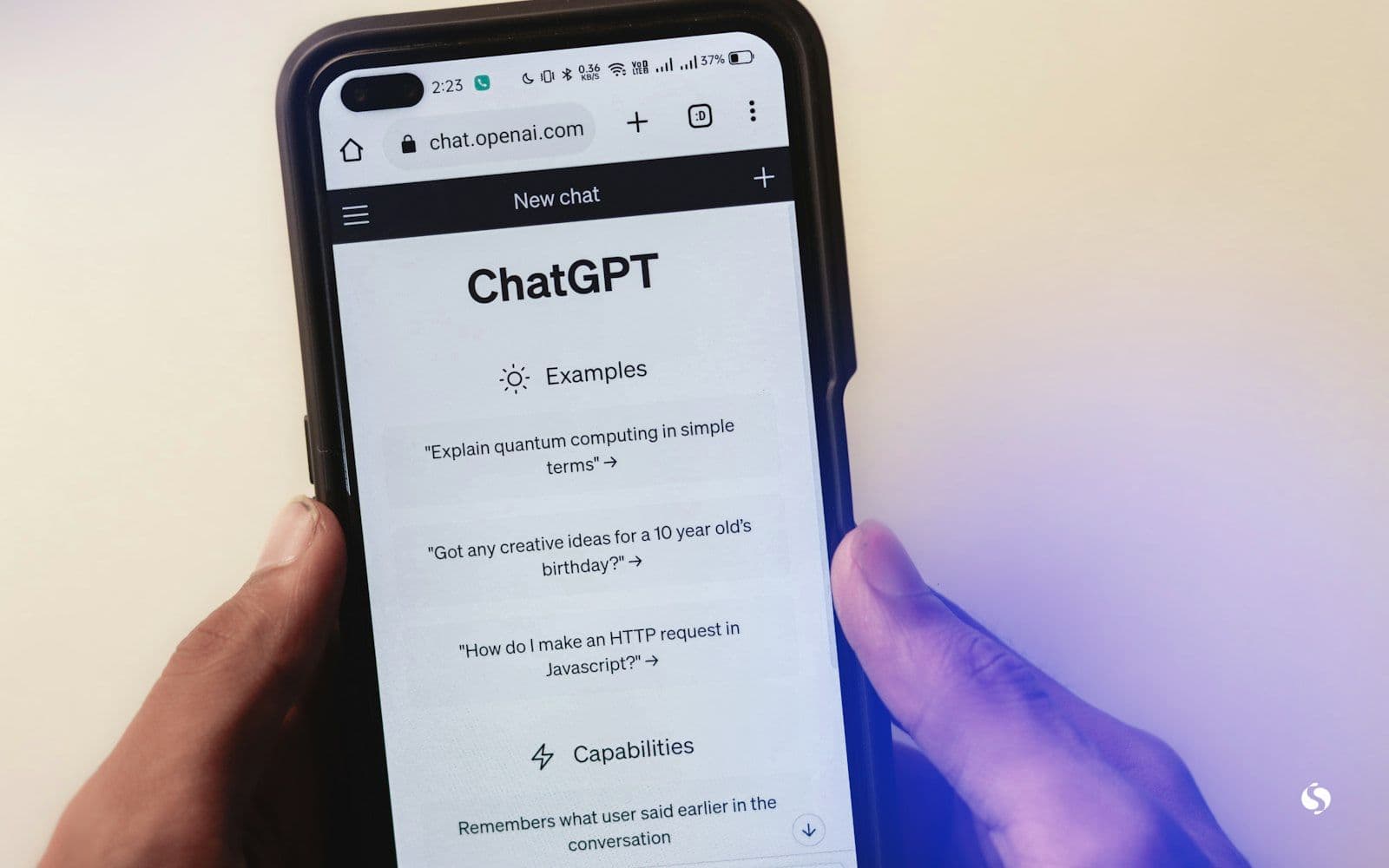
When someone asks ChatGPT, Gemini or the AI answers at the top of Google which place is good, many assistants go and search the web. They read business websites, map listings, reviews and articles that mention a place, then summarise it into an answer. The assistant has never sat in anyone's salon chair. Everything it says comes from what someone else wrote down.
How much weight each system gives to each source is something nobody outside those companies knows for sure, and it keeps changing. Ask the same question twice and you may get different answers. If someone claims a secret formula that makes AI recommend you, take it with a pinch of salt.
What we can say with some confidence is this: when a business's information is easy to find, easy to understand and doesn't contradict itself, the assistant has something it can use with confidence. When information is thin or conflicting, the easier option for it is to recommend someone else.
Write down what you do in plain words that people and AI can read
A lot of small businesses keep their most important information in pictures: a nicely designed price list, a promo poster, a photo of the menu on the wall. People understand them at a glance, but you can't search inside them, and it's hard to know how completely different systems read them. Text on a web page is the safer route.
Write it to answer what customers actually ask. What do you do? What's the starting price? Which area are you in, and what's nearby? Which days and hours are you open? How do people book? Who is it for? Use the plain language you'd use at the counter. "Event hair for concerts and weddings, about an hour, from 800 baht." That one sentence answers almost everything the student asked.
A frequently asked questions page helps a lot too, because it's already in question-and-answer form, which is close to how people ask AI.
Your name, address, phone and hours need to match everywhere
Open every place your business appears: your Google Maps listing, website, Facebook page, LINE account and review sites. Many owners find their name spelled two different ways, an old number still sitting on one of them, and hours that say 8 pm in one place and 6 pm in another.
A person reading that can usually work it out. A system trying to give one answer from several sources might pick the wrong detail, or skip you because it isn't sure. Either way, you lose. Make them all match, starting with your Google listing, which we cover in getting your business on Google Maps, then bring everything else in line with it.
What other people write about you matters as much as what you write
You can say you're good, but AI answers often draw on what others say about you too: customer reviews, articles about places in your area, mentions in local groups and websites. A business that people write about has more for an assistant to refer to.
Detailed reviews are especially useful. "Had my hair done for a concert and it held all night. The stylist asked whether I'd be standing or sitting" matches real questions far better than a five-star "great". You can't and shouldn't tell customers what to write, but you can ask every customer for a review, consistently. How to do that within platform rules is in how to get more genuine customer reviews.
Ask AI about your own business and see what it knows
The most direct test is to try it. Open two or three AI assistants and ask the way a customer would, something like "hair salon near here that does event styling". Then ask directly: "Where is [your salon name], what are its hours and prices?"
Note what it gets right, what it gets wrong and what it doesn't know. Wrong hours mean an old version is still written somewhere. Not knowing what you do means nowhere spells it out clearly enough yet. Answers change from one try to the next, so check again every month or two rather than worrying about a single answer.
There's no shortcut, and the groundwork is what works
If someone offers to guarantee that AI will recommend you, ask how they could possibly know. Even people who work on this every day can only see what seems to help. What you can actually do is the same work that gets you found on Google: clear information, consistent everywhere, written as text, with real people talking about you. It helps with customers who search for themselves and with those who ask an assistant. The bigger picture is in finding customers online as a local business.
If you'd like a website that sets out your services, prices, area, hours and common questions clearly, woowey builds and looks after it for a monthly fee, with articles and SEO set up, and you can change prices or hours yourself whenever they change, so your site never falls behind reality.
Before the next concert, another student will type the same long question late at night. If the salon with the best event hair in the area has written even one sentence saying it does concert styling, opens on Saturdays and starts at a certain price, the AI will at least have something to say about it.
Frequently asked questions
How do I get ChatGPT to recommend my business?
There's no guaranteed method. You can help by writing your services, prices, area and hours as clear text on your website, keeping your details consistent everywhere, and collecting genuine reviews regularly.
Where does AI get information about local businesses?
Many AI assistants search the web when answering, drawing on business websites, map listings, reviews and articles. Each system uses different sources and doesn't disclose all the details.
What should I do if AI gives wrong information about my business?
Find where the wrong detail still appears, such as your Google Maps listing, Facebook page or a review site, and correct it everywhere. AI answers may take a while to catch up.
Do I need a website for AI to know about my business?
It isn't required, but a website is the place where you can describe your business in full and control every word, which helps both customers and automated systems understand you.
The woowey team
We build websites and systems for businesses
We build websites, booking systems, online stores and back offices for Thai businesses, then look after them every month. What we write here comes from what we see working with real shops.
Want this for your business? Tell us
Type what you need. The woowey team builds your website and systems, then looks after them every month.
Keep reading
 Getting customers
Finding customers online as a local business: you have 30 seconds on their phone
Seven on a Friday evening, someone in a car park scrolls through three restaurants and picks one in under a minute. The better place two streets away didn't lose on the food. It lost on the phone screen.
 Getting customers
Getting your business on Google Maps: when a car breaks down, the honest listing wins
Sunday evening, the engine light comes on mid-traffic. The driver pulls over and types "garage near me". The garage that gets the job isn't the best or the closest. It's the one whose Google Maps listing tells the truth.
 Getting customers
LINE OA for shops: thousands of friends, used as nothing more than an inbox
Tuesday afternoon, a salon owner opens her LINE OA and sees thousands of friends. Most of the chats went quiet the day the customer's hair was done. And she's thinking of paying for ads to find new customers.